
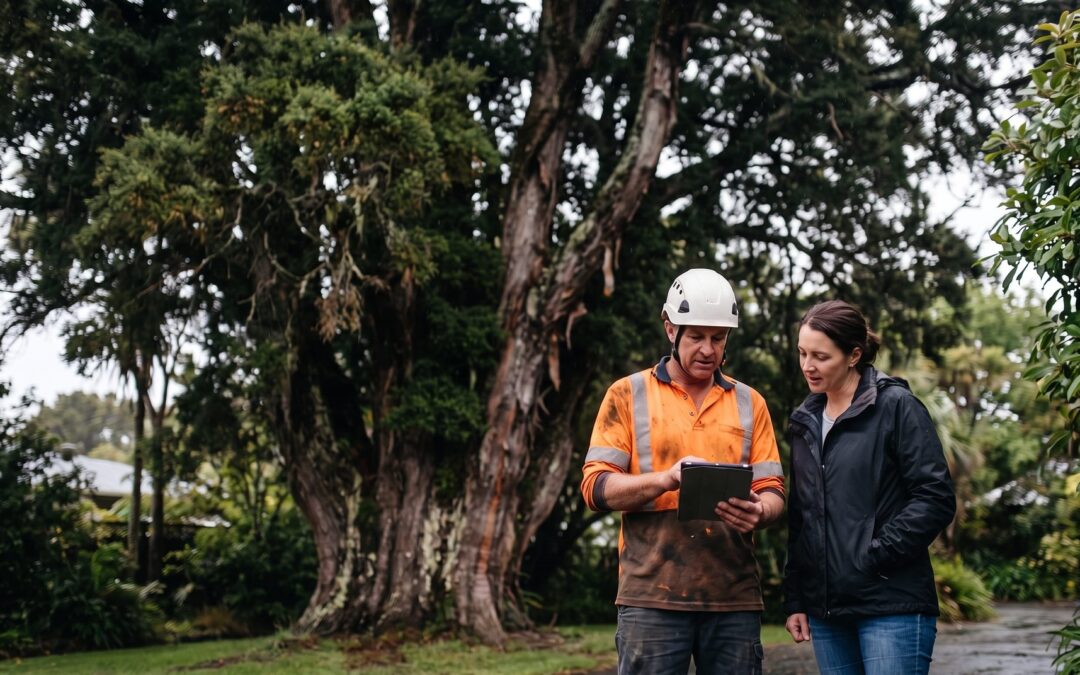
“Do I need council permission to cut this tree down?” It’s one of the most common questions we hear, and the honest answer is: it depends which side of the district boundary you’re standing on. The Kāpiti Coast and Horowhenua sit side by side, but their district plans take noticeably different approaches to protecting trees. A job that’s perfectly legal in a Levin backyard could need a resource consent on a Waikanae section, and the reverse is true too.
This guide explains how each council’s rules actually work, where they differ, which regional and national rules apply on top, and what the new planning laws passed by Parliament this month mean for property owners. It’s based on the current district plans and council documents, not guesswork, so you can make an informed decision before anyone starts a chainsaw.
Key Takeaways
- Most trees on private property in both districts can be trimmed or removed without council consent; protection depends on a tree being specifically listed or falling inside a defined category
- Kāpiti protects notable trees plus several categories of native vegetation, including listed “key indigenous trees”, ecological sites, and native trees above set size thresholds outside urban areas
- Horowhenua’s district plan tree rules centre on one list, the Schedule 3 Notable Trees, with native bush and habitat clearance managed mainly by Horizons Regional Council
- In Kāpiti, removing a protected native tree generally needs a resource consent supported by an arborist holding a Level 6 Diploma in Arboriculture, and is capped at two trees per property in five years under the simpler consent path
- Horowhenua has a little-known rural rule limiting planted shelterbelts longer than 20 metres to 6 metres in height within 10 metres of a neighbour’s boundary or road
- The Resource Management Act is being replaced, but existing district plans and their tree rules continue to apply during a transition expected to run to around 2030
The Short Answer: Most Trees Don’t Need Consent
Let’s start with the reassuring part. For the great majority of trees on private property in Kāpiti and Horowhenua, you don’t need council permission to trim or remove them.
That’s partly down to national law. Since 2015, the Resource Management Act has prevented councils from using “blanket” rules that protected whole classes of trees in urban areas. On an urban property, a tree is only protected if the district plan specifically identifies it, usually by listing it against the property address.
When Kāpiti Coast District Council brought its rules into line with that change, the number of protected urban trees fell from over 10,600 under the then Proposed District Plan to around 1,300 trees on about 400 properties. Protections for trees within ecological sites in urban areas stayed in place, covering roughly another 9,000 trees.
So protection comes down to a few specific questions:
- Is the tree on a council schedule or list?
- Is it inside a mapped protected area, such as an ecological site?
- Is it a native tree in a category the plan protects?
- Is it on council land, near a waterway, or near a power line?
If the answer to all of those is no, the tree is usually yours to manage. If any answer is yes, the rules below apply.
Kāpiti Coast District Council: How the Rules Work
The Ways a Tree Can Be Protected in Kāpiti
Kāpiti’s Operative District Plan protects trees through more than one mechanism, which is why it’s the more complex of the two districts. The council’s own Tree Management Policy, adopted in June 2026, sums it up: a protected tree is a notable tree, a key indigenous tree, or another protected tree identified in ecological sites, riparian margins or coastal areas under the District Plan.
In practice, the Ecosystems and Indigenous Biodiversity chapter of the plan protects native vegetation that is:
- Within a listed ecological site (Schedule 1), with trees on urban properties covered only if they’re listed in Schedule 2
- A key indigenous tree listed against a property in Schedule 2
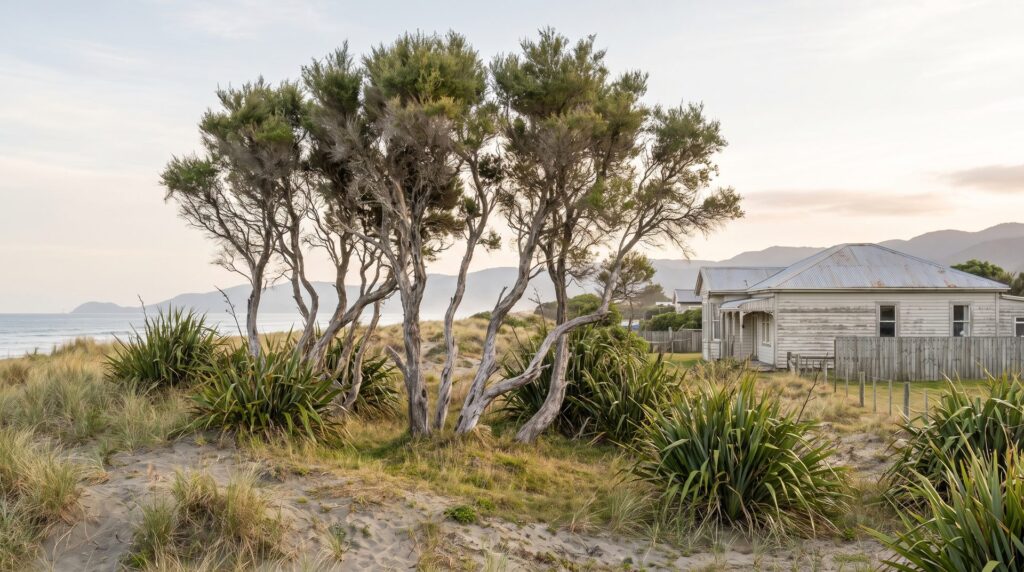
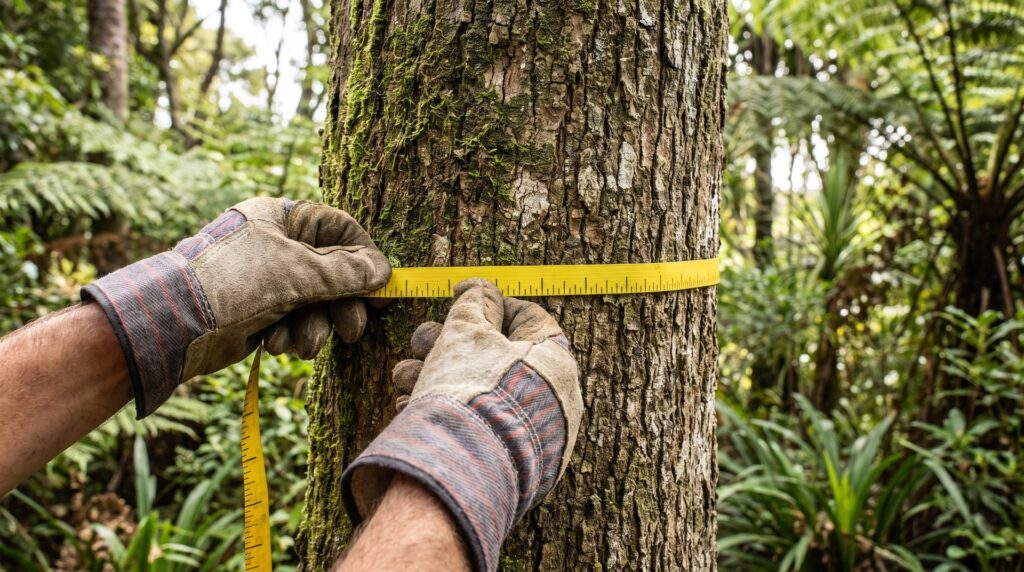
- A key indigenous tree species above set size thresholds, outside urban properties and excluding trees planted by people (the plan’s ECO-Table 1 sets the size for each species; for kānuka, for example, it’s a 15 cm trunk diameter or 3 metres in height)
- A rare or threatened vegetation species listed in Schedule 3
- Within 20 metres of a waterbody or the coast, outside the urban environment, excluding planted vegetation
Separately, the plan’s Notable Trees chapter protects the trees listed in Schedule 8, which have their own set of rules.
The council publishes a map of key indigenous trees on its open data site, and its duty planners can confirm the status of a specific tree.
Trimming vs “Modification”: The Definition That Decides Everything
Kāpiti’s plan draws a sharp line between two kinds of work, and which side your job falls on decides whether you need consent.
Trimming means pruning, including removing broken branches, deadwood or diseased growth, and selective branch removal to let in light and air or to improve the tree’s health.
Modification means felling, removing, damaging or destroying the vegetation. Importantly, it also includes certain work within the tree’s drip line, the area under its outer canopy:
- Work that compacts, seals or removes soil
- Drilling or excavation
- Discharging toxic substances
That second part catches people out. Laying a driveway, digging a trench for services or building a deck under a protected tree can count as modifying it, even if nobody touches a branch.
What You Can Do Without Consent in Kāpiti
Trimming protected native vegetation remains a permitted activity under rule ECO-R3 for key purposes, including:
- Trimming necessary to avoid an imminent threat to people’s safety or damage to lawfully established buildings
- Removing branches that are broken, dead or chronically diseased
- Trimming needed for the safe operation and maintenance of network utilities, such as telecommunications lines
The work still needs to be genuine trimming, done to good arboricultural practice, rather than removal by another name.
Removing a Protected Native Tree in Kāpiti
Removing, or otherwise modifying, a protected native tree needs a resource consent. The simplest route is a controlled activity under rule ECO-R6, which the council tightened through Plan Change 1F in 2022. To qualify, the application must meet strict standards:
- No more than two protected indigenous trees can be modified on a property within any five-year period
- The tree must be damaged, dead, dying, storm-damaged or fatally diseased
- It must present a demonstrable imminent risk of serious harm to people or buildings, or risk significantly damaging surrounding protected vegetation
- That risk must be one that can’t be solved by permitted trimming
- An arborist holding the New Zealand Diploma in Arboriculture (Level 6), or an equivalent qualification, must certify the above in writing
Anything beyond that, such as removing a healthy protected tree or more than two trees, becomes a restricted discretionary consent, where the council can weigh the ecological effects and can decline the application.
The reason for the tightening is instructive. The council’s own evaluation report describes a case where the earlier, looser version of the rule was used to gain consent to remove more than 100 protected native trees from a coastal ecological site, ahead of a subdivision on the same land. The independent ecologist found many of those trees were likely healthy and viable. The upgraded arborist qualification requirement exists because Level 4 training teaches arborists to spot potential defects, while full tree risk assessment is taught at Level 6.
Trees on Kāpiti Council Land
Kāpiti’s Tree Management Policy, adopted in June 2026, covers trees on council land such as street berms, reserves and walkways. The points that matter most for property owners are:
- You need the council’s prior written approval before pruning or removing branches from a council tree, even where it’s overhanging your property
- The council won’t top trees simply to reduce shading, debris or to create views
- Where a council tree is protected, contractors must submit a Protected Tree Management Plan at least 10 working days before work starts
- Trees on private property that fall onto roads or public spaces in a storm may be cleared by the council, with the cost recovered from the tree owner
Horowhenua District Council: How the Rules Work
One List That Matters: Schedule 3 Notable Trees
Horowhenua’s approach is simpler. Its district plan tree rules centre on a single list: Schedule 3 of the Operative District Plan 2015, the Notable Trees schedule. The council’s guidance is direct: no person may remove, damage or destroy a scheduled Notable Tree.
Listed trees range from ancient natives to well-known exotic plantings across the district, including a notable rimu recorded in Shannon. Clearance of native bush and habitat is managed mainly through Horizons Regional Council’s One Plan, covered below.
What’s Permitted for a Notable Tree in Horowhenua
The same set of conditions applies to Notable Trees across Horowhenua’s zones (in the Rural Zone, it’s rule 19.6.27). Removal or partial removal of a Notable Tree is only permitted where:
- The council has confirmed the tree is dead; or
- Removal is emergency work to safeguard life or habitable buildings from immediate danger, as confirmed by a qualified arborist
Trimming and maintenance is permitted, but only to the extent of:
- Minor trimming necessary to maintain the tree’s health, carried out by or under the supervision of a qualified arborist who has advised the council in advance
- Removing branches that are touching buildings or structures, or likely to compromise overhead wires or utility networks, again by or under a qualified arborist who has advised the council in advance
- Removing broken branches, deadwood or diseased growth, as confirmed by a qualified arborist
- Emergency work
The drip line is protected too. Within the drip line of a Notable Tree, you can’t build, lay overhead or underground services, seal, pave or compact the soil, change ground levels (including by thrust boring or directional drilling), or discharge toxic substances.
When You Need Consent in Horowhenua
Any work on a Notable Tree that doesn’t meet those conditions, including removing a living tree that isn’t an emergency, needs a resource consent as a discretionary activity. The council’s guidance notes it would need to be satisfied that the tree is dead or diseased, has become a danger to life, or is causing or likely to cause damage to property.
Horowhenua’s Little-Known Shelterbelt Rule
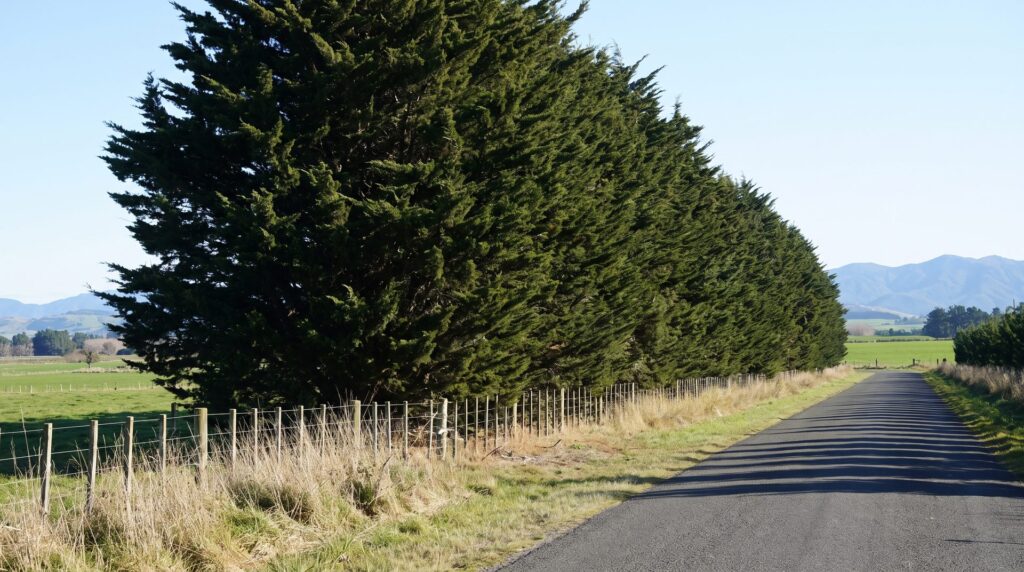
Here’s a rule that surprises many rural property owners. Under rule 19.6.16 of the Rural Zone, a shelterbelt more than 20 metres long must not exceed 6 metres in height within 10 metres of a boundary with a site in separate ownership, or a road.
There’s a second condition as well: no shelterbelt or plantation forest may be planted or allowed to grow in a position where it shades a public road enough to cause icing between 10am and 2pm on the shortest day.
Plenty of long-established macrocarpa and pine shelterbelts along Horowhenua’s rural roads and boundaries are well over 6 metres. Reducing their height is often the practical fix, but it needs care. Macrocarpa and most other conifers won’t regrow from bare brown wood, so a heavy one-off cut can leave a shelterbelt permanently bare. A staged height reduction, planned by an arborist, keeps it healthy and doing its job.
Side by Side: Kāpiti Coast vs Horowhenua
| Kāpiti Coast District Council | Horowhenua District Council | |
|---|---|---|
| Main protected tree lists | Notable trees (Schedule 8), key indigenous trees (Schedule 2), ecological sites (Schedule 1), rare and threatened species (Schedule 3) | Notable Trees (Schedule 3) |
| Native trees protected by size | Yes, outside urban properties, above species thresholds in ECO-Table 1 | Not through district plan tree rules; native habitat managed mainly by Horizons |
| Permitted work on protected trees | Trimming for imminent safety threats, broken, dead or chronically diseased branches, and utilities | Minor health trimming, clearance from buildings and wires (council notified in advance), deadwood, emergency work |
| Removal without consent | Not for protected native trees; a controlled activity consent is the simplest route | Only if council confirms the tree is dead, or it’s arborist-confirmed emergency work |
| Arborist sign-off | Level 6 Diploma (or equivalent) certification for the controlled activity removal route | “Qualified arborist” to supervise, confirm deadwood, or confirm emergencies |
| Drip line protection | Yes, soil works within the drip line count as modification | Yes, building, services, paving and level changes restricted |
| Distinctive rule | Two-trees-in-five-years cap on the simpler removal consent | Shelterbelts over 20 m long limited to 6 m high near boundaries and roads |
| Regional council | Greater Wellington Regional Council | Horizons Regional Council |
The Regional Layer: Greater Wellington vs Horizons
District councils aren’t the only authority involved. Each district sits in a different region, and regional councils manage vegetation near water, wetlands and the coast.
Kāpiti falls under Greater Wellington Regional Council, whose regional plans cover activities in and around waterways, wetlands and the coastal marine area.
Horowhenua falls under Horizons Regional Council, whose One Plan has rules about vegetation clearance in several situations:
- The coastal foredune, a strip running 200 metres inland from the first line of vegetation along the beach
- Hill country land with slopes of 20 degrees or more
- Alongside rivers and waterways, with required separation distances
- Rare, threatened or at-risk habitats, as defined in Schedule F of the One Plan
Clearance within a rare, threatened or at-risk habitat needs a resource consent from Horizons as a discretionary or non-complying activity, supported by a full assessment of environmental effects. It’s worth checking before clearing any native vegetation near Lake Horowhenua, the coast, a stream or a bush remnant.
Rules That Apply in Both Districts
Some rules don’t change at the district boundary:
- Nesting birds. The Wildlife Act 1953 protects all native birds, and it’s an offence to disturb or destroy their nests. The main nesting season runs roughly from August to January.
- Power lines. Under the Electricity (Hazards from Trees) Regulations 2003, tree owners must keep trees clear of lines. Electra runs the network in both districts, only Electra or its approved contractors may work within four metres of a line, and the grace period for the updated 2024 regulations ends on 16 October 2026.
- Neighbours. Under the Property Law Act 2007, you can generally cut back branches overhanging your property to the boundary, but the cuttings belong to the tree’s owner, and you can’t cut a protected tree without the right approvals.
- Roads. Councils can require owners to cut back trees overhanging roads and footpaths under section 355 of the Local Government Act 1974.
What’s Changing: The RMA Replacement
This month, Parliament passed the Planning Bill and the Natural Environment Bill, which will replace the Resource Management Act. For property owners, the most important point is that nothing changes overnight.
The new system will be introduced in stages. A transition period is expected to begin around a month after Royal assent, and existing plans, consents and processes continue during that time. The full new system is intended to be operating by around 2030. Until new plans replace them, the Kāpiti and Horowhenua district plan rules described in this guide still apply.
Tree protection is one of the areas likely to shift in future. The select committee report on the Bills said they intend to move away from individually listing urban trees for protection, in favour of protecting only trees with significant historic heritage value. Tree advocates, including the Tree Council, have warned this could lead to significant tree loss. Minister Chris Bishop has said trees with significant heritage value will continue to be protected, and that the new system encourages councils to be more deliberate about tree protections.
In other words, the rules may change over the next few years, but today’s rules are the ones enforced today.
What Happens If You Get It Wrong
Removing or damaging a protected tree without the right consent is a breach of the Resource Management Act. Councils can respond with infringement notices, abatement notices or enforcement orders, and serious cases can be prosecuted, with fines that can run to hundreds of thousands of dollars.
Councils take unauthorised tree removal seriously. In late 2023, for example, Kāpiti Coast District Council launched an investigation after established pōhutukawa on council land in Paraparaumu Beach were cut down without permission.
The fix is simple: check first. Confirming a tree’s status usually takes a quick look at the district plan schedules or a call to the council’s duty planner.
How the Consent Process Works
If your tree does need consent, the process in either district follows a similar path:
- Confirm the tree’s status. Check the schedules and maps, or ask the council’s duty planner.
- Get an arborist’s assessment. A written report covering the tree’s species, health, structure, risk and options is usually the backbone of the application. In Kāpiti’s controlled activity route, the certification must come from an arborist with a Level 6 Diploma or equivalent.
- Prepare the application. This includes the arborist report, site plan, photos and an assessment of effects. Replacement planting is often part of the proposal.
- Lodge and pay fees. Fees vary by council and activity type, so check the current fee schedule. Kāpiti decided in 2015 to charge nothing for consents under its urban protected tree rules; confirm with the council whether that still applies to your application.
- Wait for a decision. For most non-notified applications, the statutory processing time is 20 working days, though requests for further information can pause the clock.
- Carry out the work to the conditions. Consents often specify how the work must be done, who supervises it, and what replanting is required.
Cost Considerations
Tree work itself is priced the same way whether consent is needed or not. As a general guide, smaller trees typically start from $150-500, medium trees usually land in the $500-1,200 range, and larger or more complex removals can run from $1,500-3,000 or more.
Where consent is required, budget separately for the arborist’s report and any council fees, and allow time for processing. Those costs are almost always far smaller than the cost of getting it wrong, both financially and for a tree that can’t be replaced.
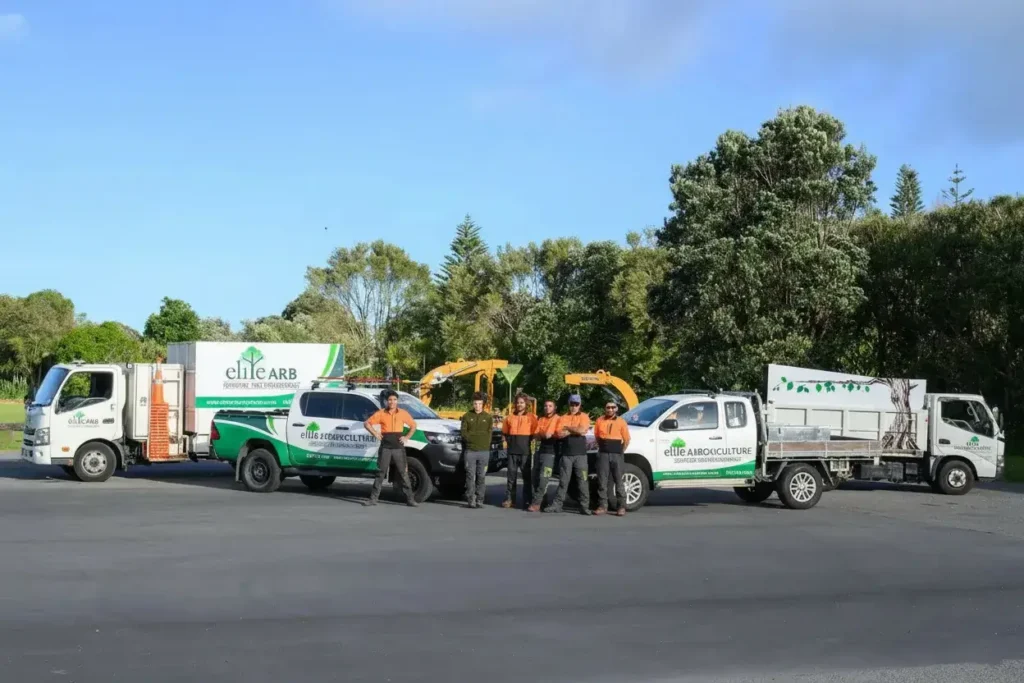
How Elite Arboriculture Helps
We work on both sides of the district boundary every week, from Paekākāriki and Waikanae up through Te Horo, Ōtaki and into Levin and the wider Horowhenua. That means we know how differently the two councils treat the same tree.
On every quote, we’ll check whether a tree is likely to be protected before recommending any work. We’ll tell you upfront whether your job is permitted, what documentation or level of arborist sign-off it needs, and whether the council needs to be notified before we start. Where a job is permitted but needs advance notice, as with minor trimming of a Horowhenua Notable Tree, we’ll make sure that’s handled properly.
And where a tree genuinely needs to come down, we’ll help you through the process, with the right paperwork, so the job is done safely and legally.
Conclusion
The Kāpiti Coast and Horowhenua share a boundary, a coastline and a lot of the same tree species, but not the same rules. Kāpiti protects a wider range of native trees through several overlapping categories, with a tightly controlled consent route for removing them. Horowhenua focuses its district plan protection on its Notable Trees schedule, leaves native habitat mainly to Horizons, and adds a practical rule for tall shelterbelts on rural boundaries.
Whichever district you’re in, the approach that protects you is the same: check before you cut. And with the RMA replacement now passed, it’s worth keeping an eye on how these rules evolve over the next few years.
Not Sure If Your Tree Is Protected? Ask Jade
Elite Arboriculture provides professional tree services across the Kāpiti Coast, Levin and the wider Horowhenua district. Before any work starts, we’ll help you understand whether your tree is protected and what your options are.
Contact Jade at Elite Arboriculture on 027 343 8846 or email [email protected] to arrange a free, no-obligation assessment.
For more on caring for your trees through the year, read our spring pruning guide for Levin and Horowhenua, or our guide to what a tree surgeon does in Levin.
Frequently Asked Questions
Do I need council consent to remove a tree on my property in Levin?
Usually not. In Horowhenua, the district plan’s tree protection centres on the Notable Trees listed in Schedule 3. If your tree isn’t on that list, you can generally remove it without district council consent. If it is listed, removal is only permitted where the council has confirmed the tree is dead, or where it’s emergency work confirmed by a qualified arborist. Otherwise, you’ll need a resource consent. Native vegetation near waterways, the coast or in significant habitats may also be covered by Horizons Regional Council rules.
How do I find out if a tree is protected on the Kāpiti Coast?
Check the Kāpiti Coast District Plan schedules, including the Notable Trees schedule, the list of key indigenous trees by property, and the ecological sites maps. The council also publishes a key indigenous trees map on its open data website. If you’re outside an urban area, native trees above certain size thresholds can be protected even if they’re not individually listed. The council’s duty planners can confirm the status of a specific tree.
Can I trim a protected tree without consent?
In many cases, yes. Kāpiti permits trimming of protected native vegetation to deal with imminent safety threats, remove broken, dead or chronically diseased branches, or maintain utilities. Horowhenua permits minor health trimming of Notable Trees, clearance from buildings and wires, and removal of deadwood, but most of this must be carried out or supervised by a qualified arborist, and the council must be advised in advance of health and clearance trimming.
What happens if I remove a protected tree without consent?
It’s a breach of the Resource Management Act. Councils can issue infringement or abatement notices, seek enforcement orders, or prosecute, and fines in serious cases can reach hundreds of thousands of dollars. You may also be required to replant. Checking a tree’s status before work starts is by far the cheapest option.
Will the new planning laws change tree protection rules?
Likely, but not immediately. The Planning Bill and Natural Environment Bill, which replace the Resource Management Act, passed their third reading in September 2026. Existing district plans and their tree rules continue to apply during a transition expected to run to around 2030. The select committee signalled a move away from listing urban trees for protection, except those with significant historic heritage value, so rules may change as new plans are developed.
Source Links
- Kāpiti Coast District Council – Tree Management Policy (June 2026) – https://www.kapiticoast.govt.nz/media/2kfhm5fh/tree-management-policy-2026.pdf
- Kāpiti Coast District Council – Plan Change 1F and Section 32 Evaluation Report – https://www.kapiticoast.govt.nz/media/yaiiobma/section-32-evaluation-report-on-proposed-plan-change-1f.pdf
- Kāpiti Coast District Council – Tree Protections Eased, Trimming Rules Made Simpler (2015) – https://www.kapiticoast.govt.nz/council/news-and-information/news-archive/previous-years/2015/tree-protections-eased-trimming-rules-made-simpler/
- Kāpiti Coast District Council – District Plan – https://www.kapiticoast.govt.nz/propertyhousingandrates/how-to-building-and-resource-consents/definitions/district-plan/
- Kāpiti Coast District Council – Key Indigenous Trees Map – https://data-kcdc.opendata.arcgis.com/maps/operative-district-plan-2021-key-indigenous-trees
- Horowhenua District Plan 2015 – Chapter 19: Rural Zone – https://www.horowhenua.govt.nz/files/assets/public/v/2/districtplan2015/horowhenua-district-plan-2015-chapter-19-rural-zone.pdf
- Horowhenua District Plan – Schedule 3: Notable Trees – https://www.horowhenua.govt.nz/files/assets/public/v/1/districtplan2015/horowhenua-district-plan-2015-schedule-3-notable-trees.pdf
- Horowhenua District Council – Protected Trees FAQ – https://www.horowhenua.govt.nz/Contact-Us/FAQs/FAQs-Trees/Protected-trees
- Horowhenua District Council – Trees and Your Rights – https://www.horowhenua.govt.nz/files/assets/public/v/1/resource-consents/trees-and-your-rights-jul-2014-web.pdf
- Horizons Regional Council – Vegetation Clearance Information Sheet – https://www.horizons.govt.nz/HRC/media/Media/One%20Plan%20Documents/Vegetation-Clearance-Infosheet-FINAL-20141202.pdf?ext=.pdf
- Ministry for Cities, Environment, Regions and Transport – Planning Bill and Natural Environment Bill Pass Third Reading – https://www.mcert.govt.nz/news/planning-bill-and-natural-environment-bill-pass-third-reading/
- RNZ – Tree Advocates on the RMA Replacements – https://www.rnz.co.nz/news/environment/1192700/many-many-more-trees-will-disappear-under-rma-replacements-advocate-says
- Electra – Tree Safety and Planting Around Power Lines – https://electra.co.nz/tree-safety/
- Department of Conservation – Wildlife Act 1953 – https://www.doc.govt.nz/about-us/our-role/legislation/wildlife-act/
- Elite Arboriculture – Horowhenua Services – https://elitearboriculture.co.nz/services/arborist-horowhenua/